No sign out front. No marquee, no logo, nothing on the building at Laporte Ave that tells you what happened inside. Rise Against cut their first album here. Bad Religion came through. Offspring recorded in these rooms. A Grammy from a Mexican rock band was won in Northern Colorado by a guy who had spent the afternoon before it happened alone with mariachi music on iTunes, trying to reverse-engineer a genre he’d never touched.
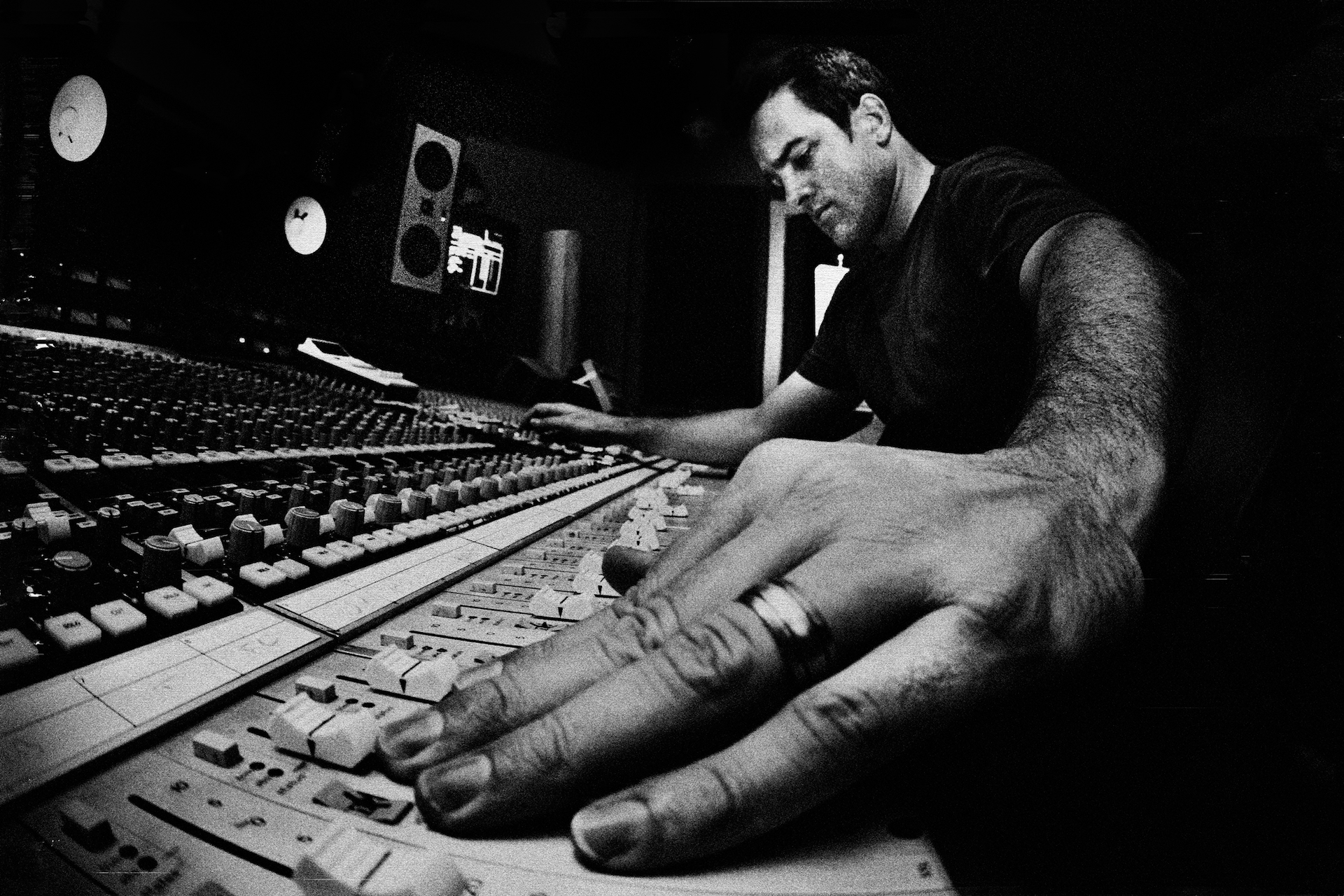
His name is Jason Livermore. He has been at The Blasting Room for 30 years and he will tell you he never had a plan. That’s not modesty. It’s just true.
“We built this place as a place to hang out and make records,” Livermore said. “Somehow we got lucky and we’re still here doing it.”
Legendary studios in LA have folded because the land became worth more than the music being made on it. The Blasting Room’s rent in 1994 was around $1,000 a month. They own the building now. That’s not luck. That’s what happens when you stay somewhere long enough that the place becomes yours.
The question worth asking is why they stayed at all.
Livermore showed up at 23 because a friend pointed him north. He had just gotten out of college, was playing in a band, and going nowhere at a job where everyone around him was in their 30s and 40s and very comfortable. He was not. A manager named Don Robertson, who handled both Livermore’s band and the punk group All, pointed him toward Fort Collins, where All’s drummer, Bill Stevenson, was building a studio instead of spending his Interscope advance on someone else’s room. Stevenson wasn’t just a drummer. He co-founded Black Flag. He played with The Descendants. And he was done asking permission.
Don told Livermore: Fort Collins. You should come.
“I paid off all my debts and moved out here basically,” Livermore said. His first impression was not encouraging. He landed at DIA, drove north, found country music on the radio and big stretches of nothing. He grew up in Northern California. This was not that. “I was almost like, ‘I’m not gonna do this.'” A few days, some bars, some time to breathe. He changed his mind and never changed it back.
His entry into engineering happened sideways. He was Chad Price’s roommate, Price sang for All, which meant Stevenson would keep him late to record backing vocals, small stuff at first, enough to learn the shape of the thing. Then came a tour with Bad Religion, The Supersuckers, and Samiam, 2,000 to 4,000 people a night, learning monitors on the fly. Eventually Stevenson pulled him back. Stay in the studio. Get good at this.
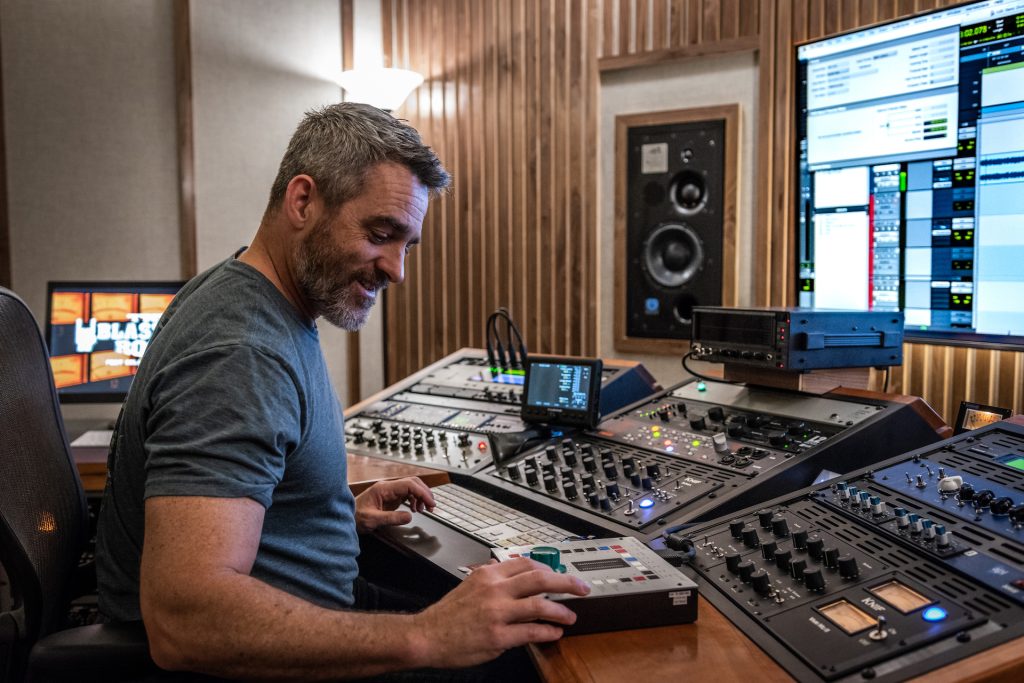
The moment it clicked came during a mixing session in New York. The Descendants had recorded there, and they brought in Andy Wallace to mix it. Wallace was, at the time, the best mixer alive. Nirvana. Rage Against the Machine. Jeff Buckley. System of a Down. Slayer. Livermore sat in the room and watched him work. “That sort of changed my life,” Livermore said. It didn’t rewrite everything overnight, but something locked in. He came back to Fort Collins and kept going.
“It’s kind of like painting a picture,” Livermore said, “except the paint is the musicians. You have to take what they give you and arrange it the way you want. Many different people can make many different pictures out of the same set of paint.”
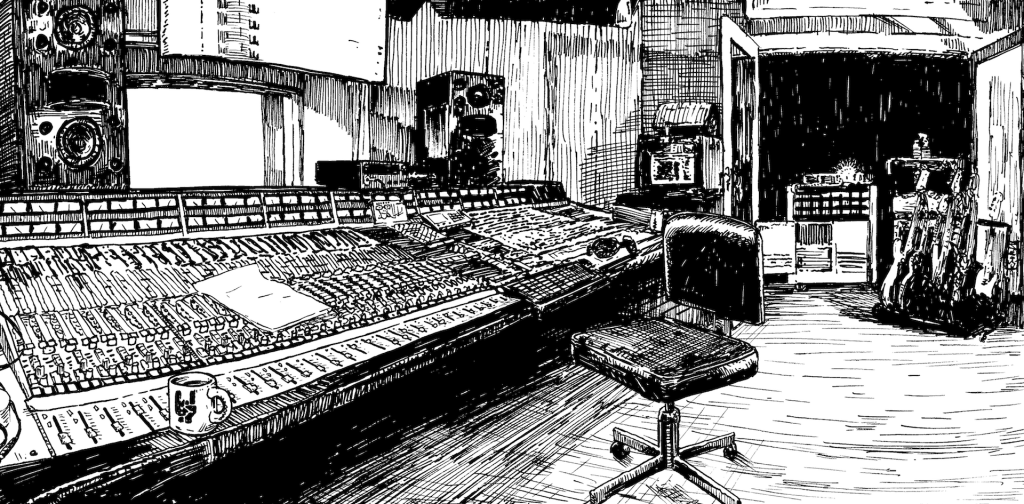
Through the late ’90s and into the early 2000s, The Blasting Room ran almost entirely on the network Stevenson had built through decades in punk. Bands came because they knew Bill. Blink-182 was supposed to record their first album here. Offspring came through. Rise Against came through and kept coming back, a relationship now 23 years old. Between roughly 1999 and 2010, Livermore was working 80-hour weeks, no days off, finishing one record on day 25 and starting a new band on day 26. He was spending $30,000 to $40,000 of his own money every year on gear, buying microphones and equipment the studio didn’t have because he couldn’t help himself. The studio was becoming his whether he meant it to or not. By the time Stevenson made him a co-owner, Livermore owned as much of the room as the room did.
“We didn’t need anyone to know where we were or what we did,” Livermore said. “Because we had so much business.”
Nobody outside Fort Collins was paying attention, and that turned out to be the whole point. While studios in LA were burning through advances and watching their neighborhoods gentrify around them, The Blasting Room was just working. The relationships Stevenson had built in punk kept the calendar full. The rent stayed low. The work stayed good. And then one of those relationships took a turn nobody saw coming.
It started with a Mexico City band called Finde, whose drummer had once rehearsed in The Blasting Room’s back room. That connection got Livermore a mixing job around 2005. The record turned out well. The singer from Finde, Pepe, eventually became one of the most powerful promoters and label figures in Mexico, and he kept sending Livermore work, including a track for a solo pop artist named Mario Bautista.
“It was basically like mariachi light,” Livermore said. “I said, ‘Pepe, why did you send me this? I do punk rock.’ He said, ‘You’ll figure it out.'” So Livermore spent a day on iTunes listening to mariachi, reverse-engineering a genre he’d never touched, and mixed it. That song now has around 60 million views on YouTube.
From there, Pepe brought Livermore into something bigger: the reunion of Molotov, a legendary Mexican rock band. The band had already attempted a comeback album, but when Livermore listened to the result, both he and Pepe agreed they could do better. Molotov booked a week at The Blasting Room. They recorded one song. By the time they heard it back, the decision was made: start over. They rerecorded the whole album in seven days, mixed it all in Fort Collins, and eventually won a Grammy.
A Grammy. In Northern Colorado. In a building with no sign out front.
The Blasting Room has always attracted a certain kind of visitor. There was the time an Australian band called Frenzal Rhomb came through and their drummer decided he didn’t like the patio bar, a wooden fixture a previous band had built and named after themselves. He dragged it into the creek. Jonathan Lugenbill winched it out. They came back a second time and the drummer burned it, reducing it to a wheelbarrow full of ashes. Lugenbill put the ashes in an urn, labeled it “RIP No Trigger Ba,” and set it in the kitchen. It’s still there. When Livermore texted the drummer a photo, the response was immediate: “I’m gonna snort that thing the next time I come there.”
That urn in the kitchen might be the most accurate symbol of what The Blasting Room actually is. Not a legacy institution. Not a museum to punk rock. Just a place where strange, specific things happen to people who showed up and never left.
The Blasting Room today is looser, wider, stranger than it ever was. Andrew records folk artists, Gregory Alan Isakov has made two albums here. There’s an engineer for metal, one for indie rock. Bill’s son Miles, plays in a local band and records the younger Fort Collins scene because he knows everyone. Jonathan Lugenbill, the everything guy, built one of the studios by himself, maintains the gear, the website and even the security cameras. “He’s kind of brought us up to the 21st century,” Livermore said. “Bill and I are a little bit more bare bones. We’re punk rockers.”
At some point, life took shape. Family. Friends. A city that became familiar the way only 30 years can make a place familiar.
The building still has no sign out front. It probably never will. Fort Collins has one of the best recording studios in American punk rock sitting quietly inside its city limits for three decades.