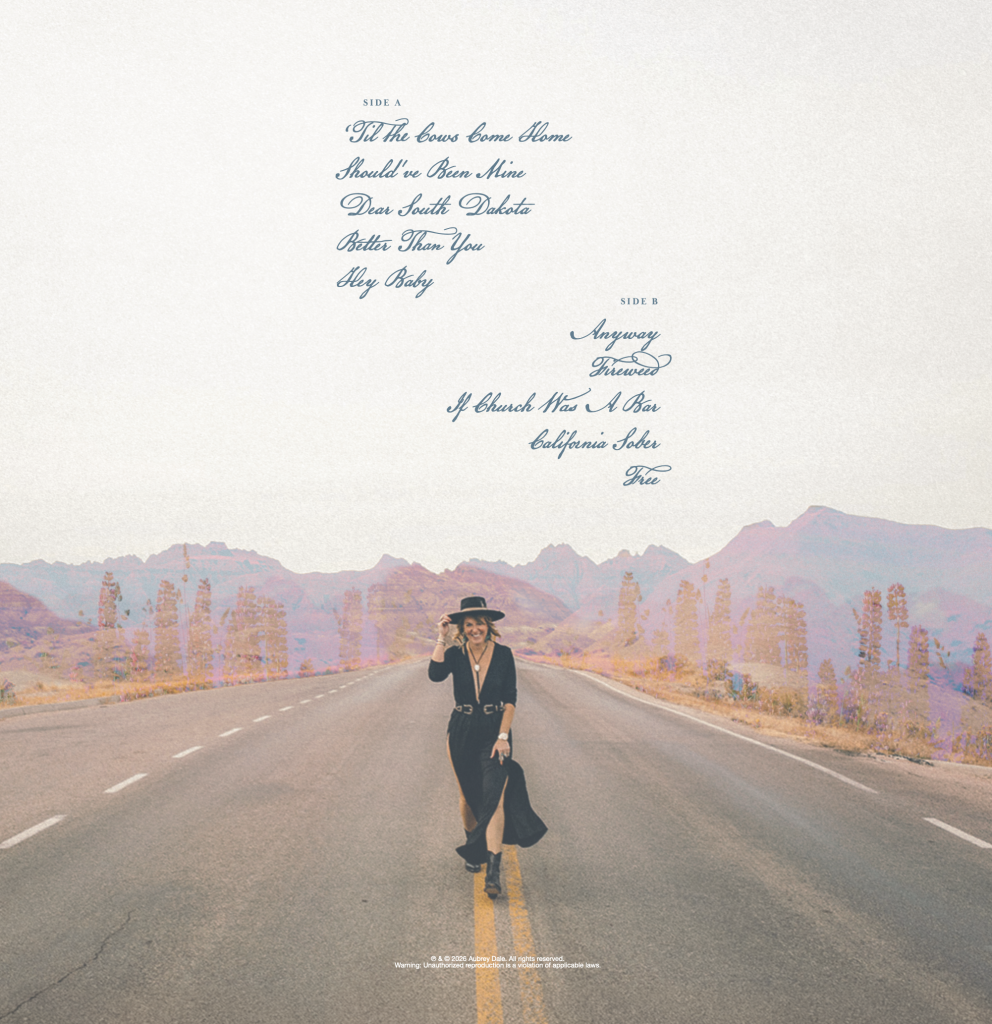
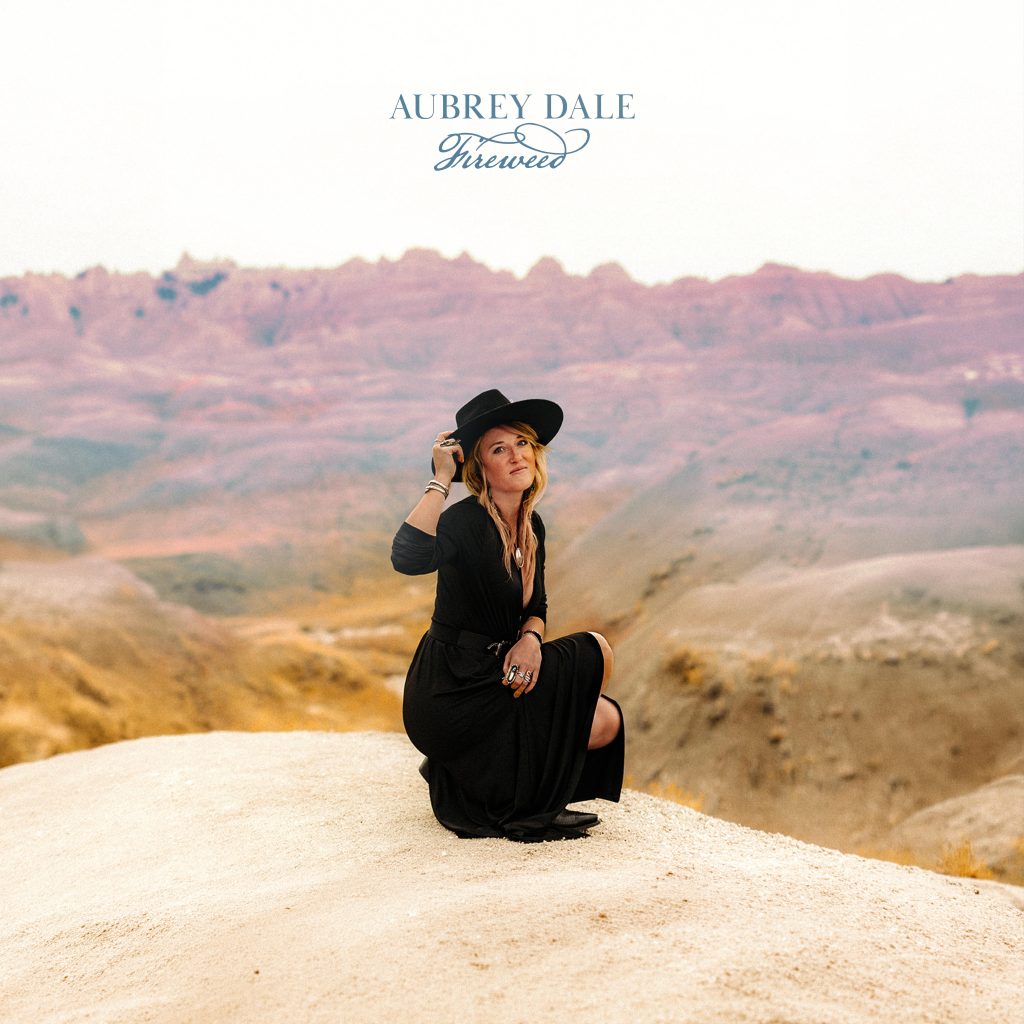
Colorado has never had a shortage of artists trying to split the difference between country tradition and something newer. Aubrey Dale actually pulls it off. Her debut full-length, Fireweed, lands somewhere between classic traditions and a production sensibility that doesn’t feel beholden to Nashville. It’s a record that earns your attention quietly, and keeps it.
Side A establishes the tone with confidence and range. The opener sets an unhurried brightness that gives way to something warmer and more guardian on “Should’ve Been Mine,” a track that sits with you after it ends. “Dear South Dakota” is where Dale fully opens up, its open dynamics and steady churn making it one of the stronger moments on the record. Then “Better Than You” pulls the tempo all the way back, closing the side slowly. It’s a quiet gut punch, and the choice to end there shows the discipline of the songwriter. Side A could stand alone as a complete statement.
Side B makes it clear it isn’t interested in coasting. “Anyway” opens the flip with a deliberate jolt, one of the loudest and most driving moments on the album, and it repositions everything that follows. The title track arrives at B2 and earns its place as the emotional center of the record. “Fireweed” carries the widest dynamic range here, a bright textured sound that cuts through the mix with a momentum that justifies the title. After that, “California Sober” follows with the energy of a song that knows exactly what it wants to say and doesn’t waste a second saying it.
“If Church Was a Bar” is worth flagging. It sits noticeably quieter and more compressed than everything around it, and that contrast turns out to be the point. Its deliberate intimacy reads as a late-night campfire moment, and the kind of song that asks you to lean in rather than turn it up. It’s the most distinct production choice on the record, and it mostly lands. “Free” follows as a measured, warm resolution, closing things with the same quiet confidence that defined the best moments on Side A. It earns the ending.
Dale is working in well-mapped territory, but Fireweed doesn’t feel derivative. The writing is grounded, the sequencing is intentional, and the production mostly stays out of the way of the songs rather than trying to elevate them artificially. There’s a maturity to the pacing here that you don’t always hear on a deputy, a sense that Dale knows what kind of artist she is and isn’t in a hurry to prove it to anyone. That kind of restraint is harder to pull off than it sounds.
This is a debut to take seriously.