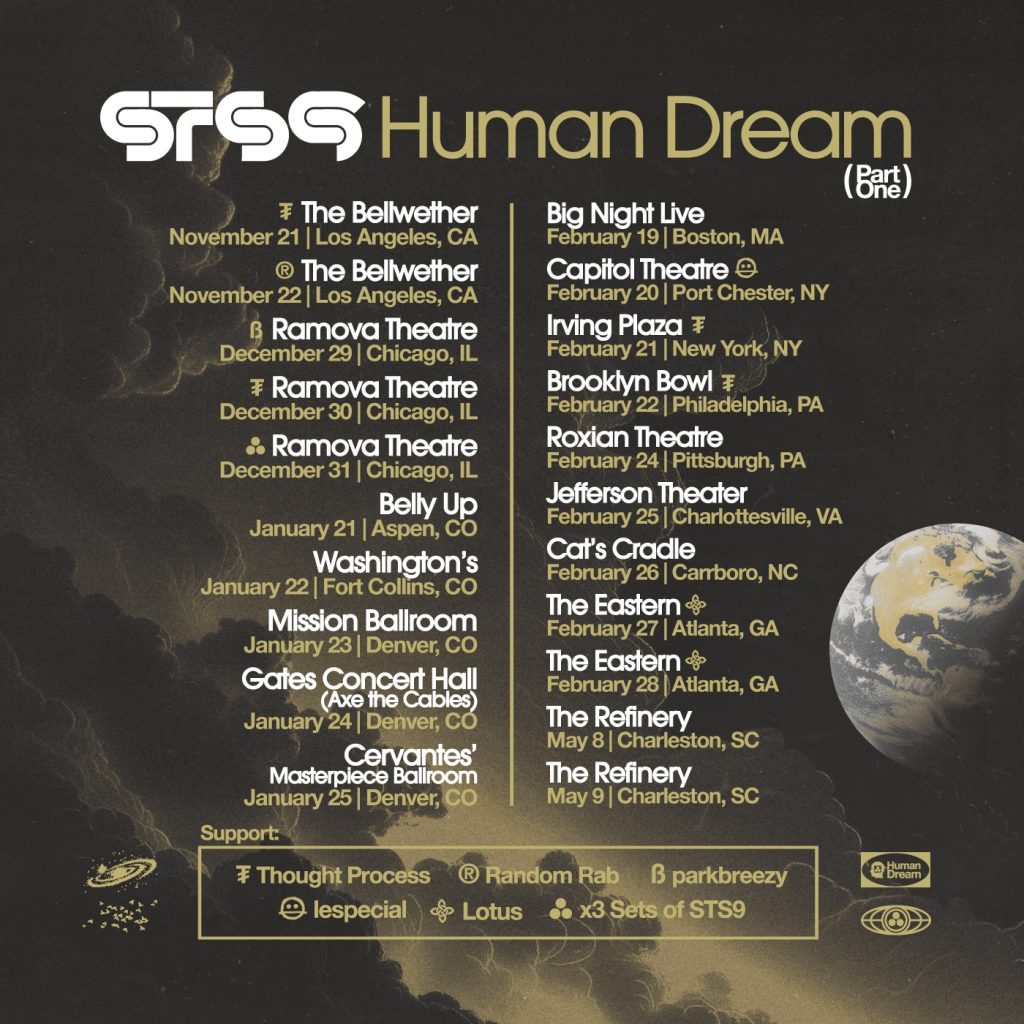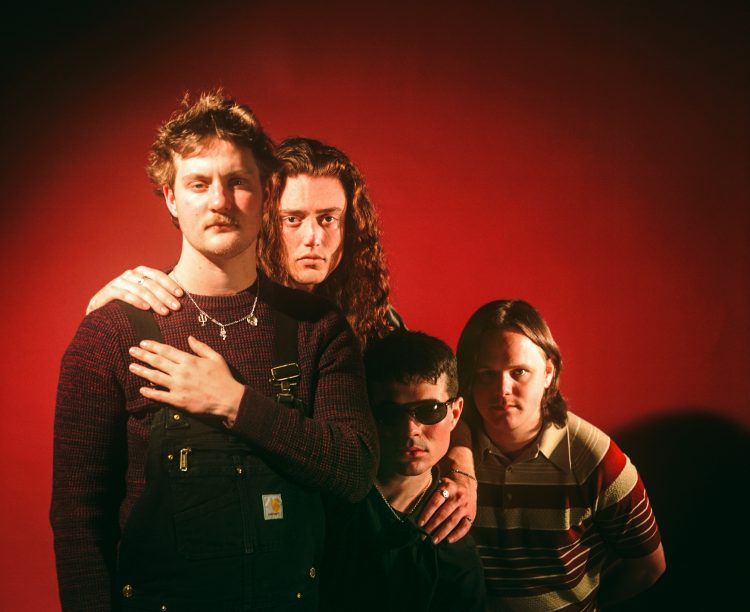

It is no secret how much Colorado loves a well orchestrated jam. And for the fans of the jam band scene, STS9 is a name that carries a lot of weight. Formed in 1998 in Atlanta, Georgia, this music collective has carved a path for themselves around the world with their tight grooves and infectious songs. Over their extensive career they have combined elements of electronic, funk, jazz, hip hop, and drum and bass. The result is a live show that feels more like a musical journey than a collection of songs.
Throughout the years, STS9 has toured extensively, resulting in a staggering list of wins. This list includes multiple night runs at Red Rocks, consistent high-profile spots in the festival circuit, thirteen studio albums, and countless sold out shows. In that time, a lot has changed for the group; families were started, careers shifted gears, and overall life happened, leading to an ever evolving sound. Surprising to some, since 1997 all the original members are still with the band, except bassist Alana Rocklin who replaced David Murphy in 2014.
Speaking with drummer Zach Velmer and Alana Rocklin, what has stayed consistent through the change is the love of the live show. And for STS9, it is about putting together a unique experience for fans, every single night.
“When we play somewhere we try not to repeat the songs that we played the year before. So there’s a lot that goes into our show,” explains Rocklin. “Everywhere we go we’re rehearsing and working on the show all day until we get to the actual show. It’s important to conserve energy and be focused. We’re there to crush.”
“It takes a lot to share our art,” adds Velmer. “We curate these events completely differently. The prep before so we’re all on the same page is incredibly time-consuming. I wouldn’t change it for anything but that’s where we are at. We’re in artist mode.”
It is this curation fans have come to love from an STS9 show. And for Velmer and Rocklin, it is music around them that often inspires this attention to detail.
“I just saw David Byrne at the Dolby Theater in L.A. and I was just so inspired. Obviously there’s the legacy of Talking Heads, but it was the way he was sharing with his band in that venue,” muses Velmer. “He wasn’t playing some huge stadium. He curated the creativity that he had behind the concept that was storytelling at its next level. And then I got to go play a show, which was really exciting.”
“I’m surprised by music all the time, especially with my bandmates and getting to listen to them every night,” adds Rocklin. “I’m also surprised by albums I’ve listened to over a period of many years. I might listen to something I heard twenty years ago and listening to it now and I’m like, ‘wow, I never heard that before’, or it hits me differently. Also, I have a teenage son, and he plays me music all the time that surprises me. I probably would not have heard that if it had not been for him showing it to me.”
With almost thirty years on the road, STS9 has first hand experience with the challenges facing the live music industry. A lot has shifted over the years, from the rising costs of living for your average concert goer, to the steady decline of the independent venue owner. But despite these challenges, STS9 has seen the love for live music thrive.
“As anything, the only constant is change. With promoters buying venues and these monopolies involved in this, twenty years ago, or even ten years ago, there were so many different independent promoters. It seems incredibly corporate, to be perfectly honest with you,” Velmer explains. “But there are a lot of positives in the idea that people just love supporting art and going to see shows. On that tip I don’t know if we’ve seen a drastic change.”
“Yeah, I would say there’s two sides to the story,” Adds Rocklin. “There’s the actual moment of the concert where the music’s happening and all the people are there. You’re sharing that experience and the beauty of that moment is still just as potent and important to people. It’s getting to that moment for the band and the fans that has completely changed.”
Looking ahead at the challenges facing young musicians, Velmer and Rocklin both have the same advice; don’t give up. “Anything worth a shit takes time and consideration, just don’t give up,” advises Velmer.
“That was my literal first thought too. It’s like, just don’t stop,” adds Rocklin. “If it’s something you believe you are here to do, then work at it every day. And if you can, find a good teacher and listen to a lot of music and listen intentionally. But man, don’t stop.”